
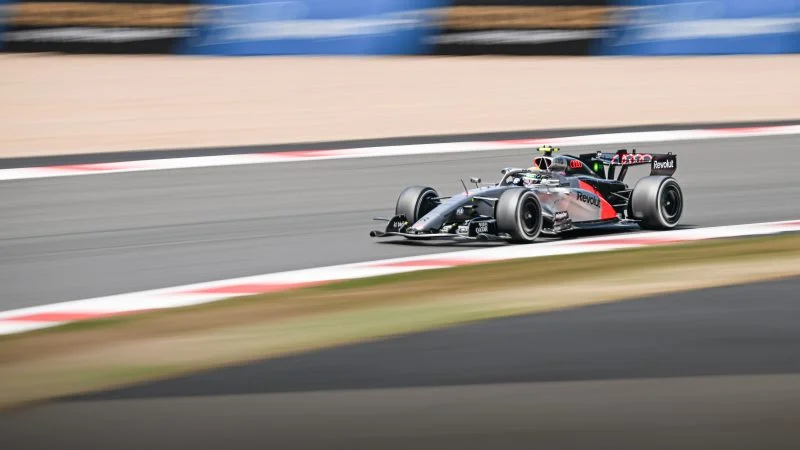
The FIA is already looking into how drivers will pass each other when Formula 1 switches to its next set of engine rules. Following the recent announcement of a 2.1-litre turbocharged V8 with a scaled-back hybrid setup, official attention has turned to the racing on track.
The complex active aerodynamics and straight mode zones designed for 2026 will be dropped under the next engine cycle. Those rules effectively replaced traditional DRS with an electrical overtake mode, but the governing body wants a much simpler approach for 2030 onwards.
FIA single-seater director Nikolas Tombazis confirmed the direction in an exclusive interview with Autosport. He explained that electrical power will focus heavily on a push-to-pass feature instead of heavy energy recovery. The preliminary plan uses a 200kW electrical limit, splitting 100kW for general deployment and holding back another 100kW specifically for overtaking.
Tombazis told Autosport that if push-to-pass needs extra help, the FIA is completely open to bringing back DRS alongside it. The main objective is to make sure moves happen in braking zones rather than turning into easy drive-by passes down long straights.
Simulations are currently underway to work out the exact details, including whether push-to-pass will use a fixed time limit per race like IndyCar. Tombazis stressed to Autosport that while having both DRS and push-to-pass is definitely on the table, final decisions will depend on what the simulation data shows over the coming months.
Sources: Autosport and TheJudge13. Photo: 2026 Chinese GP – Nico Hulkenberg (cropped).jpg, CC BY 4.0, Liauzh, via Wikimedia Commons.
0 comments
No comments yet Be the first to share your thoughts.