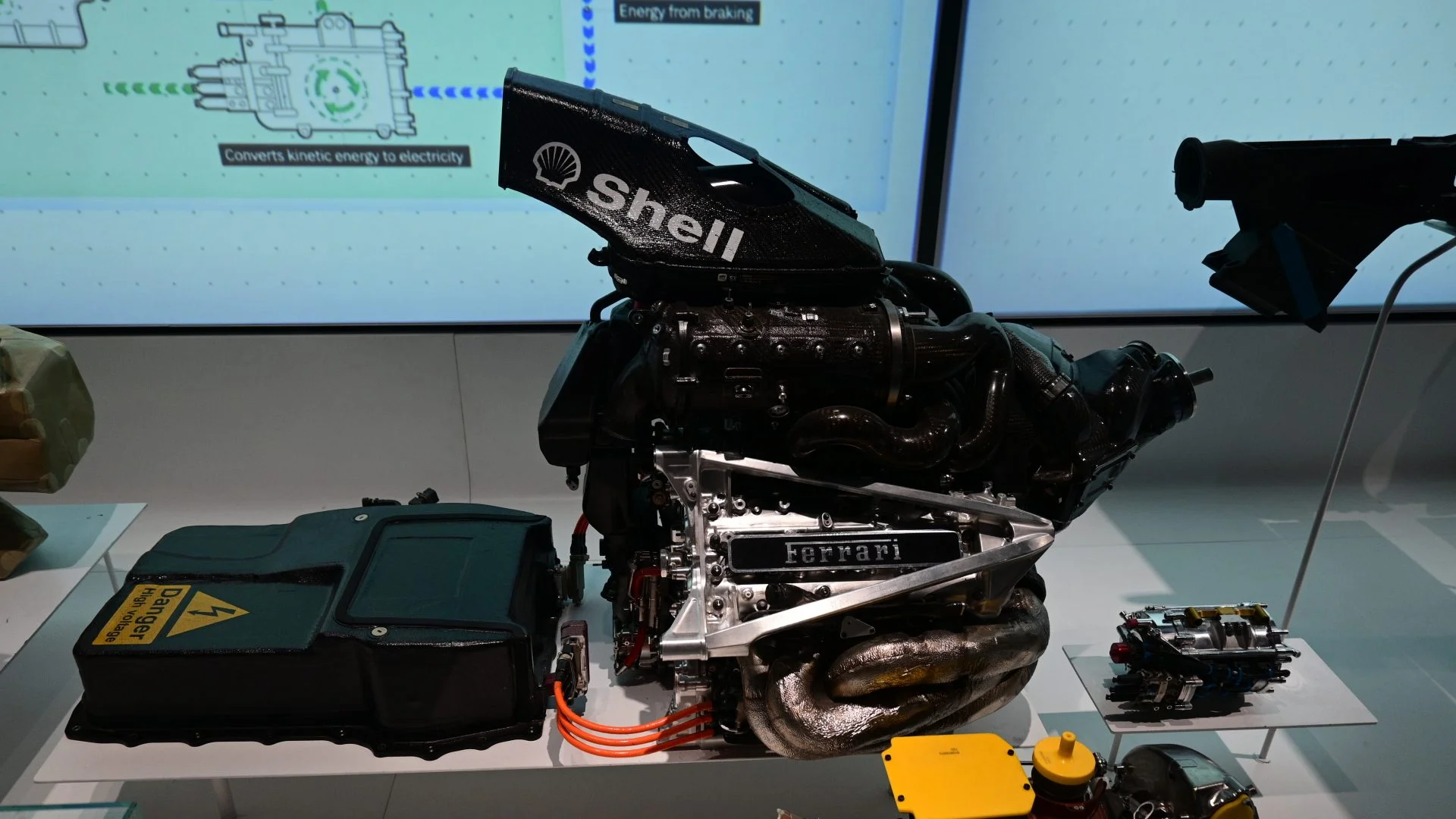
The FIA has locked in a hard cut-off for the current V6 hybrid engines, confirming that development will freeze starting from the 13th race of the 2028 season. Once that weekend arrives, manufacturers can only touch their power units for reliability fixes, with all performance upgrades banned. The goal is to clear the runway for 2030, when Formula 1 officially brings back 2.1-litre turbocharged V8 engines featuring a small hybrid component providing roughly 10 percent of total output.
FIA single-seater director Nikolas Tombazis confirmed the details to Autosport, explaining that the freeze prevents suppliers from wasting money on two separate engine projects at the same time. The governing body has also drawn hard lines around 2030 engine development to stop anyone from stealing an early advantage. Manufacturers cannot run single-cylinder dyno tests before 1 October 2027, and testing a complete 2030 power unit on the dyno is banned until 1 July 2028, just as the current freeze takes effect.
General Motors is the only exception to those dyno limits. Because GM is building an operation from scratch, it has been granted an exemption to carry out foundational work earlier. The American brand originally planned to introduce its own V6 hybrid in 2029, but with the V8 rules arriving for 2030, GM will stay on as a Ferrari customer for an additional year.
There is still one major question mark regarding the Additional Development and Upgrade Opportunities system, which is meant to help struggling manufacturers bridge performance deficits. Tombazis admitted the FIA is late sorting out those catch-up rules, and no final decision has been made yet. The FIA wants to ensure an engine builder like Honda does not end up permanently trapped at the back of the grid once the freeze locks into place.
Getting the paddock to agree on anything is never simple, but Red Bull Powertrains chief executive Laurent Mekies noted during Friday's press conference in Qatar that this plan was a rare moment where every stakeholder pulled in the exact same direction. The 2030 V8 framework received unanimous support from the teams and now heads to the World Motor Sport Council next month for rubber-stamping.
Sources: Autosport and PlanetF1. Photo: Ferrari Tipo 065-6 Engine and Mercedes AMG F1 W10 EQ Power+ MGU-K at Formula 1 Exhibition, London.jpg, CC BY-SA 4.0, Hullian111, via Wikimedia Commons.
0 comments
No comments yet Be the first to share your thoughts.